

Knowing how to clean a roof the right way protects coatings, prevents leaks and keeps the home’s curb appeal high without causing damage. This guide covers safe methods for different roofing materials, the cleaning solution to use, weather windows, gear, and when to call a professional roof cleaning service. You will also learn how roof cleaning ties into roof maintenance, gutter cleaning and regular inspections so the whole roof structure stays in top condition.
Is it safe to clean a roof yourself?
DIY roof cleaning is risky because of height, slips and chemical exposure. Attempt only simple, low pitch jobs with proper safety gear.
- Use a safety harness or edge protection and a tied ladder on firm ground
- Wear non slip shoes, gloves, eye and skin protection
- Avoid cleaning on wet or windy days and never walk on wet metal
- Keep people, pets and delicate plants clear of runoff and spray
What causes roof stains and growth?
Roof surfaces collect algae, moss, mould, mildew, lichen, tree sap and airborne dust, which show up as black streaks, green patches and chalky residue. Overhanging trees add debris and shade that keep moisture on tiles and steel roofs. Poor ventilation and damp valleys slow drying and encourage regrowth.
What are the best methods to clean a roof
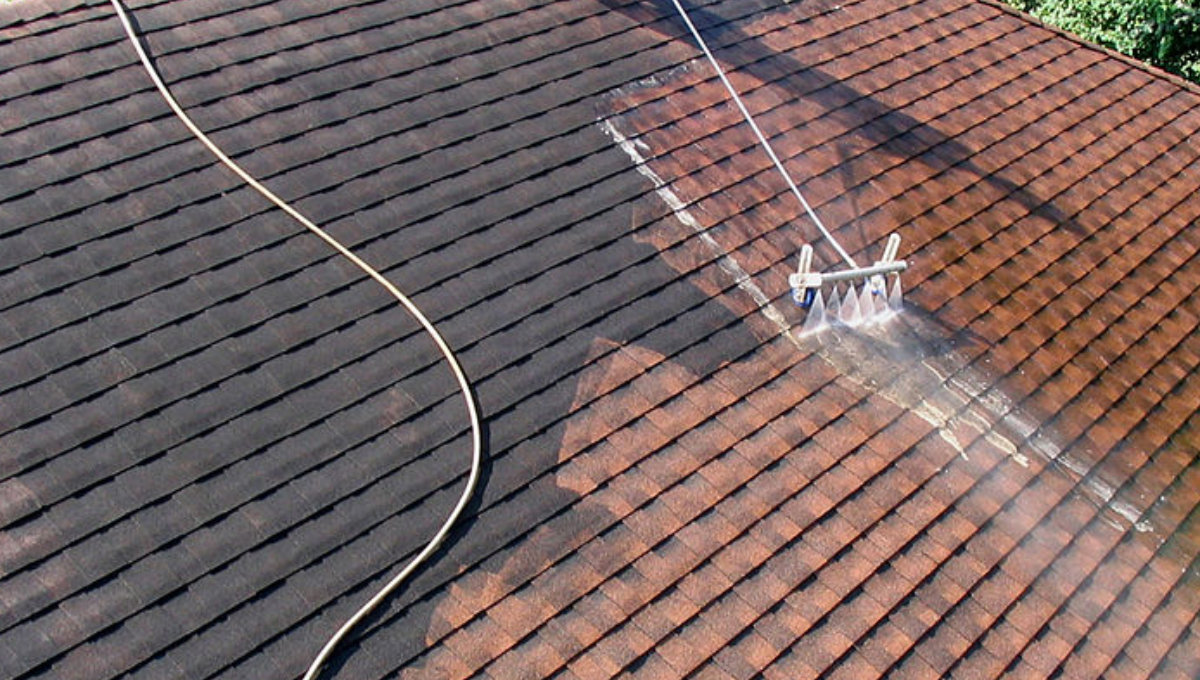
Soft washing is the safest all round method for most roofing materials. High pressure water can gouge coatings, drive water under laps and shorten roof life.
- Soft wash sequence
- Apply the approved cleaning solution to a cool, dry roof
- Let it dwell for the label time so chemistry can work
- Gently scrub thick moss or lichen if needed
- Rinse with clean water from top to eaves
- Neutralise if the product requires it and protect surrounding plants
- Pressure washers
Keep to pressure cleaning on a low setting, with a wide fan and long stand off. Do not pressure wash shingles, slate or aged concrete tiles.
Chemicals that work and how to use them safely
- Sodium hypochlorite kills algae quickly and is common in soft washing. Use the manufacturer’s mix, add a surfactant for better wetting, keep the surface wet during dwell, then rinse thoroughly
- Sodium percarbonate releases oxygen to lift organic matter and is a good option where bleach is not suitable
- Biocide follow ups can slow regrowth after the main clean
Always keep runoff away from gardens and tanks. Pre wet surrounding plants, cover sensitive beds and direct flows to hardstand and approved drains. Never mix chemicals and never use harsh solvents that can strip protective coatings.
Which roof types need special care?
- Tile roof, clay or concrete: soft wash only. Repair cracks and ridge capping before any cleaning. Keep foot traffic to load points and use crawl boards on brittle tiles
- Shingles: soft wash only, gentle rinse, no pressure washer. Avoid scraping that lifts granules
- Slate: non acidic cleaners with a soft brush. Slate is fragile and becomes slick when wet
- Steel roofs: tolerate low pressure and soft wash, but rinse thoroughly to protect paint systems and check laps and fasteners after the job
- Other roofing materials: always check the manufacturer’s care guide first to keep warranties intact
What weather is best for cleaning your roof?
Pick a dry, mild day with light wind. Avoid hot sun that flashes chemicals dry, avoid rain that washes products off too soon and finish before evening dew. Work in small controlled areas so your cleaning solution does not dry on the roof.

Step by step cleaning process that avoids damage
- Inspect first
Walk the roof only if it is safe. Note broken tiles, loose ridge capping, rust spots, lifted laps, soft spots in timber and clogged gutters. Fix urgent roof repairs before washing to prevent leaks. - Protect the site
Isolate rainwater tanks, cover delicate plants, set up hose lines to control rinse water and place signage to keep people away from overspray. - Dry debris removal
Sweep or blow loose debris toward the eaves. Clear valleys, sumps and downpipe pops. Do not push sludge into downpipes. - Pre treat thick growth
Hand scrape heavy moss and lichen so the cleaning solution can reach the surface. - Apply cleaning solution
Mix to label. Apply from bottom up on steep roofs to prevent streaking, keep sections evenly wet and avoid overspray on walls and windows. - Dwell time
Follow the specified minutes for the product. Shade, temperature and material affect dwell. Keep an eye on delicate plants and rinse splashes immediately. - Rinse
Rinse from top to eaves with clean water. Use garden hose pressure on tiles, shingles and slate. Use low pressure on metal with a wide fan only. - Neutralise and final rinse
If your system requires a neutraliser, apply it now and rinse again. Restore tank inputs once water runs clear. - Clean down and check
Flush gutters and downpipes to prevent dried slurry from blocking outlets. Inspect flashings, fasteners, sealants and ridge lines. Photograph the finished job.
Roof cleaning versus roof maintenance
Cleaning removes biological growth and stains. Roof maintenance keeps the roof weather tight by fixing defects before they become leaks.
- Repair cracked tiles, re secure ridge caps, replace perished screw washers and reseal flashings before washing
- Combine the visit with gutter cleaning so water can drain freely
- Record before and after photos for warranty and resale
How often should you clean a roof
Most homes benefit from regular roof cleaning every 2 to 5 years. The interval shortens with heavy shade, coastal salt, industrial fallout or dense leaf cover. Plan annual inspections and spot treatments so stains never get a foothold and the job stays low effort.
Will cleaning void warranties or harm roofing materials
Using high pressure or harsh chemicals can void warranties. Approved soft washing keeps coverage intact when you follow the care guide for your roof type and the cleaner’s label.
- Avoid wire brushes and rotary turbo nozzles
- Test a small hidden area first
- Keep notes on products and mix ratios in case a future claim needs them
Environmental care that actually works
Uncontrolled runoff can harm gardens and waterways. Protect the site and keep products where they belong.
- Pre wet and cover plants, then rinse them again after you finish
- Direct flows to hard surfaces and approved drains
- Use biodegradable surfactants and observe local rules
- Keep pets indoors until the area is fully rinsed and dry
Safety essentials for homeowners
- Use a harness or edge protection, tied ladders and three points of contact
- Wear non slip shoes, gloves, eye protection and a respirator for chemical mist
- Manage hoses to avoid trip hazards and keep clear of power lines and solar gear
- Never clean in wet or windy conditions and never work alone on steep or two storey roofs
How algae and moss hurt lifespan and energy efficiency
Growth traps moisture at laps and fasteners, lifts edges and reduces reflectance. That increases heat gain in summer and can lead to leaks. A clean roof runs cooler, keeps coatings intact and helps insulation work as designed.
Can you clean a roof without chemicals
You can remove loose debris and rinse with clean water, but lasting results usually need an approved biocide. If bleach is unsuitable, try sodium percarbonate and expect to repeat treatments sooner. Zinc or copper strips along the ridge can deter regrowth between cleans.
Signs to clean versus repair or replace
- Clean when stains wipe or treat away and the roof surface is sound
- Repair if you see broken tiles, rusted steel, loose ridge capping or leaking flashings
- Replace if widespread failure suggests the covering is at end of life
If you are unsure, book a roof inspection by a qualified roofer who can separate cosmetic staining from structural damage.
Maintenance tips that keep the roof clean longer
- Trim overhanging branches to improve sun and airflow
- Keep gutters, valleys and downpipes clear
- Improve roof space ventilation to speed drying
- Install zinc or copper strips near the ridge on recurring algae sites
- Schedule regular cleaning with the change of seasons so growth never becomes thick and labour intensive

When to hire a professional roof cleaning service
- Two storey homes, steep pitches, fragile tiles or slate
- Extensive moss and lichen that need staged treatment
- Sensitive sites with gardens, pools or rainwater tanks
- Roofs that need repairs and cleaning in one visit
A professional roof cleaning will bring the right cleaning solution, soft washing gear, safety systems and environmental controls to complete the job without causing damage.
Frequently Asked Questions
Conclusion
Cleaning your roof the right way means soft washing with approved products, gentle rinsing, careful site protection and solid safety. Repair first, then wash. Work in the right weather window, protect surrounding plants, manage runoff and avoid high pressure on tiles, shingles and slate. If access is difficult or the roof needs repairs, engage a professional roof cleaning service so the job is safe, warranty compliant and keeps the roof’s integrity intact for years.

Adam has 28 years of roof tiling and restoration experience, he has been running Fremantle Roofing Services since its inception and is still trying to improve the business and its reputation. Adam has worked on everything, Often a little grumpy before 10 am but otherwise always happy to discuss the job and explain exactly what’s going right or wrong with your roof.





Leave A Comment