
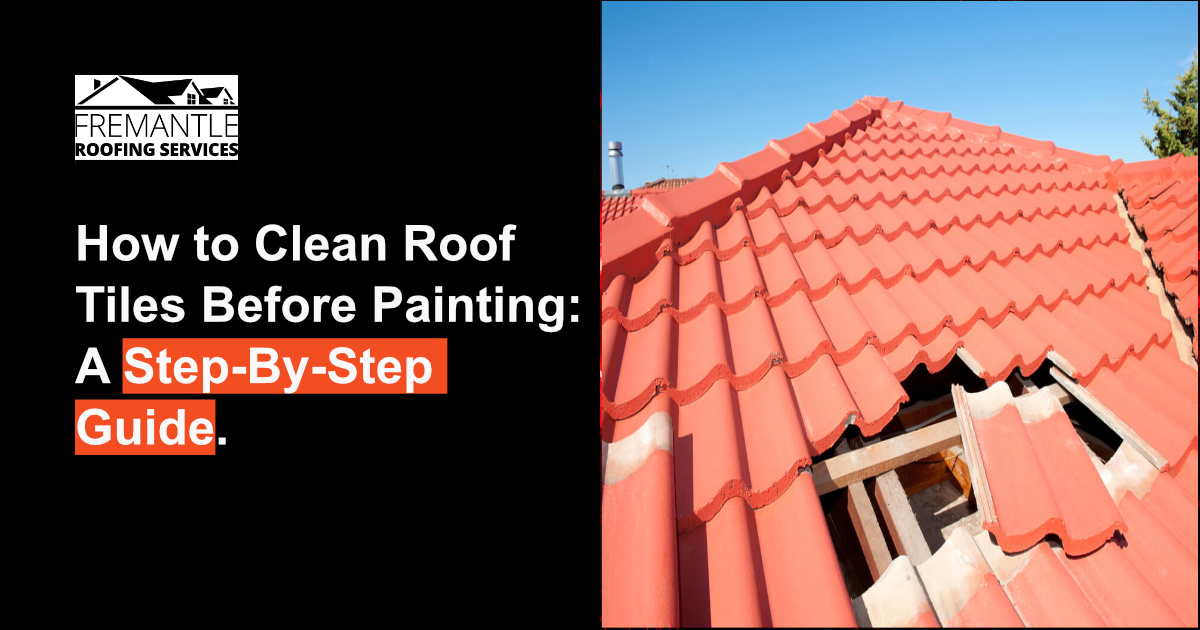
Effective roof cleaning of roof tiles properly is the single most important step before painting because it removes dirt, moss, lichen and chalky residues so primer can bond and the topcoat lasts. This guide shows you the safest way to clean roof tiles, what equipment to use, and how to prepare concrete and terracotta tiles for a long lasting paint finish. Keeping a roof clean can significantly prolong its lifespan by preventing costly repairs and maintaining the aesthetic appeal of your home.
Tools And Materials
You need the right gear to ensure a thorough tile roof clean efficiently and safely.
Tools
- Pressure washer with adjustable output, ideally 1,200 to 2,000 PSI, set around 1,500 PSI for most work, and a 25° to 40° fan nozzle
- Soft-wash sprayer or garden sprayer for cleaners and biocides
- Long-handled soft-bristled brush, stiff brush and plastic scraper for manual removal
- Leaf blower or soft-bristled broom to clear loose debris
- Gutter guards or filter socks for downpipes and surrounding vegetation protection
- Moisture meter for dry-to-paint checks
- Ladder of sufficient height with non-slip feet, roof anchor, safety rope and safety harness
- Non slip shoes or soft soled shoes, safety glasses, rubber gloves, respirator as required
Materials
- Roof tile cleaner suitable for concrete and clay tiles
- Sodium hypochlorite solution mixed to 1 to 3 percent available chlorine with surfactant for moss and mould growth
- Quaternary ammonium biocide as a post-clean treatment to inhibit re-growth
- Eco friendly cleaners for light soiling or sensitive gardens, such as a mild detergent solution or a 50/50 mix of water and distilled white vinegar
- Plastic sheeting or tarps to protect plants, paths and solar equipment
- Primer matched to tile type and roofing materials
- Flexible pointing compound, masonry crack sealant and replacement tiles
- Clean water for rinsing

Safety Precautions Before You Start
While working at height on tile roofs is hazardous, it is crucial to avoid pressure washing and set up safety equipment first.
- Install fall protection with a rated roof anchor, safety rope and harness, and work with a partner.
- Use a sturdy ladder tall enough for safe access. Do not use a ladder that is too short.
- Disconnect rainwater tanks at the gutter to prevent any cleaner entering storage.
- Cover gardens and pre-wet surrounding vegetation with tarps and fresh water so run-off dilutes on contact. Keep pets and people clear of the area.
- Check window and door seals are closed to prevent water ingress during cleaning.
- Plan your footwork and step on the reinforced overlapping section in the lower third of each tile. Avoid ridge caps and noses to avoid breaking damaged tiles.
- Avoid harsh chemicals like hydrochloric or muriatic acid that can corrode and discolour roof tiles and harm landscaping.
- Never work on a wet roof unless you are secured. Wet surfaces are extremely slippery.
Inspect The Roof And Choose The Right Cleaning Method
If unsure, seeking professional help during inspection determines whether you should pressure wash or soft wash first.
- Concrete Roof Tiles tolerate controlled pressure washing at 1,200 to 2,000 PSI using a 25° to 40° fan tip kept about 300 to 450 mm off the surface. Hold the fan parallel to the tile to avoid driving water under laps.
- Terracotta Roof Tiles And Glazed Clay Tiles are more brittle. Soft washing with cleaner is preferred. If rinsing with pressure, keep well under 1,000 PSI with a wide fan and greater standoff.
- Older Roofs with brittle or damaged tiles need gentler handling and more brushing. Replace broken tiles before painting. If roof tiles are brittle, pressure washing should be avoided as it can cause cracks or dislodgment.
- Heavy Moss, Algae Or Lichen calls for a two-stage approach: soft-wash chemistry and agitation first, followed by a low-pressure rinse, then a biocide application to kill remaining spores and inhibit return.
Step-By-Step Roof Tile Cleaning Process
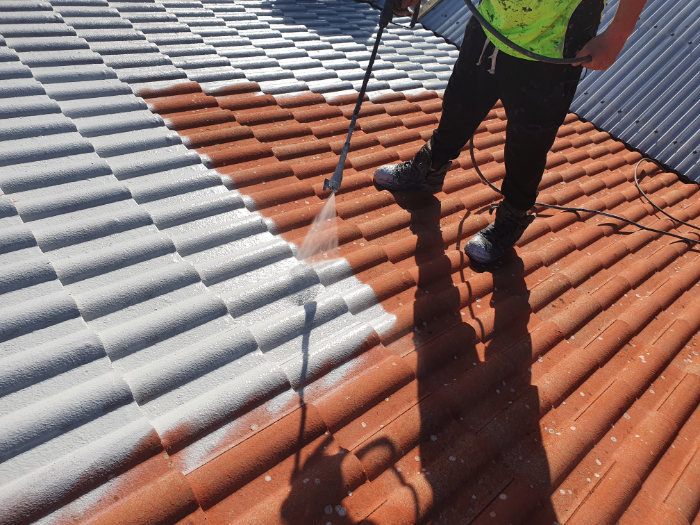
Follow this sequence to clean tile roofs safely and prepare for a paintable roof surface.
1. Prepare The Work Area
Protect gardens with tarps, fit gutter filter socks, isolate downpipes and bypass tanks, and set up ladders, roof anchor and harness.
2. Clear Loose Debris
Start cleaning by removing all loose debris such as leaves, sticks and ridge dust using a leaf blower or soft-bristled broom. Clearing gutters now prevents blockages and keeps rinse water moving away from the house. Removing large debris from the roof before cleaning makes the process more efficient and prevents clogging gutters.
3. Manual Removal Of Growth
Use a soft-bristled brush or plastic scraper to lift the bulk of moss and lichen. Manual removal is more labour-intensive but limits damage from high pressure, especially on older roofs and terracotta tiles.
4. Apply Roof Tile Cleaner
Use a soft-wash sprayer to apply roof tile cleaner or a sodium hypochlorite mix at 1 to 3 percent available chlorine with surfactant. For light, eco-sensitive cleans you can use a mild detergent or a 50/50 water and distilled white vinegar mix. Start at the highest point and work in small sections for complete coverage. Allow 15 to 20 minutes of dwell time to break down organic growth. Do not let the solution dry on the roof.
5. Agitate Stubborn Stains
Use a stiff brush on concrete roof tiles for tough stains and a soft brush on terracotta for more stubborn stains. Work away from laps so dirty water flows down the tile face, not under it.
6. Rinse From The Top Down
Rinse from the ridge to the gutters to keep water moving off the roof.
- On concrete tiles use around 1,500 PSI within the 1,200 to 2,000 PSI range, a 25° to 40° fan and a 300 to 450 mm standoff. Maintain overlapping passes to avoid tiger striping.
- On terracotta tiles use a low-pressure hose or very low pressure on the washer to avoid chipping and water ingress. Keep the nozzle at least 30 cm from the surface.
Promptly rinse cleaners off to avoid residue.
7. Treat For Lichen And Re-Growth
After rinsing and once surface water has drained, apply a quaternary ammonium biocide to kill remaining spores and reduce re-growth. Leave on the surface per label instructions. Plan a follow-up inspection after 8 to 12 weeks to spot treat any persistent lichen growths.
8. Flush Gutters And Downpipes
All debris washed off the roof ends up in gutters, so flush them with a hose to ensure proper drainage. Confirm downpipes are clear before reconnecting tanks.
9. Allow Tiles To Dry Completely
Let the roof dry completely before repairs or primer. Aim for 24 to 48 hours of fair weather. If you have a meter, paint when moisture is at or below 15 percent. Check shaded faces and under solar frames last.
Pressure Washing Do’s And Don’ts For Tile Roofs
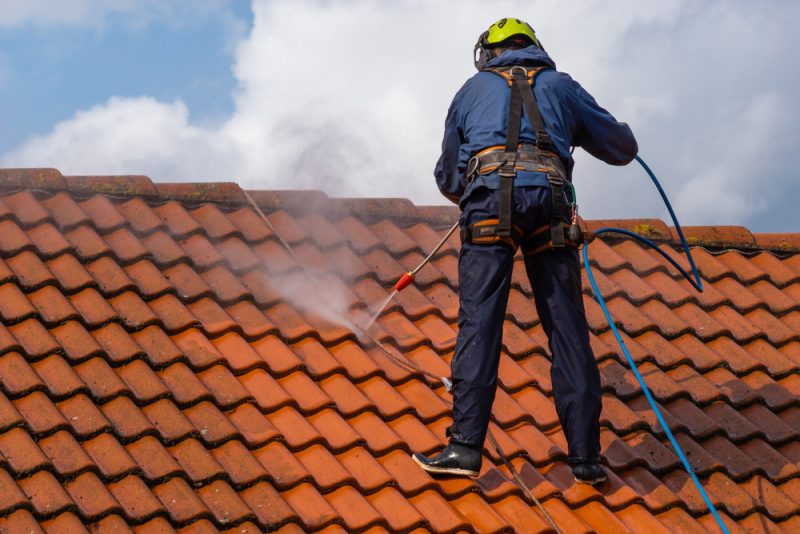
Correct technique keeps water out of the roof and prevents costly repairs.
Do
- Use low to medium pressure around 1,500 PSI for most concrete tiles
- Keep a safe standoff distance and a wide fan angle
- Work from the highest point to the gutter line in lanes with overlapping passes
- Use soft washing as the primary method for terracotta and other fragile tiles
Don’t
- Do not use a turbo nozzle or pencil jet on tile roofs
- Do not aim into laps, under ridge capping or into pointing
- Do not pressure wash glazed terracotta at high pressure
- Do not stand on tile noses or ridge caps, and avoid twisting on individual tiles
How To Remove Moss And Lichen From Roof Tiles
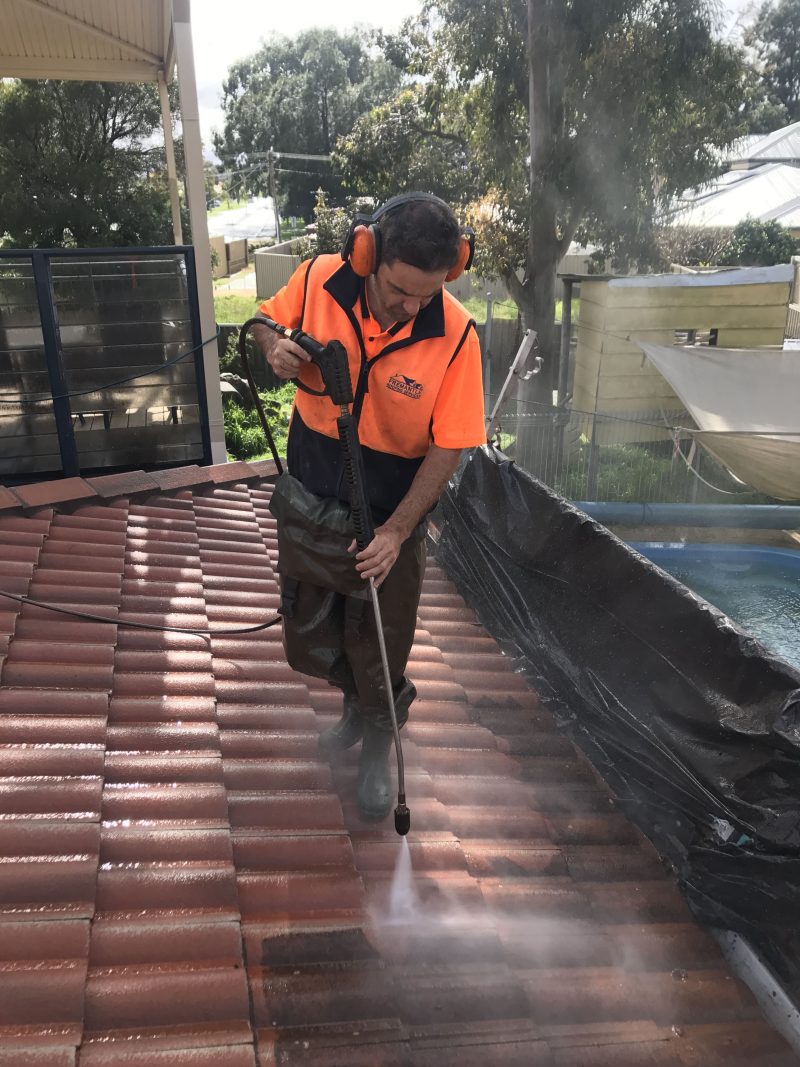
Removing growth without damaging tiles requires a controlled process.
- Soft-Wash First with the chosen roof tile cleaner to break the bond and reduce brushing effort.
- Agitate Gently with the correct brush type to lift growth from the tile surface.
- Rinse Low Pressure and keep the fan sweeping away from laps to control water entry.
- Apply Biocide after cleaning to prevent rapid return.
- Choose Mild Chemistry when possible. Eco friendly cleaners are suitable for light growth. Avoid strong hydroxide caustics unless manufacturer-approved, and never use acids that can etch and discolour tiles.
Drying, Repairs And Primer Prep On A Clean Roof
Tiles must be paint ready before you prime to ensure long lasting protection.
- Drying: Allow 24 to 48 hours of drying in fair weather. Confirm tiles are completely dry, especially in shaded zones.
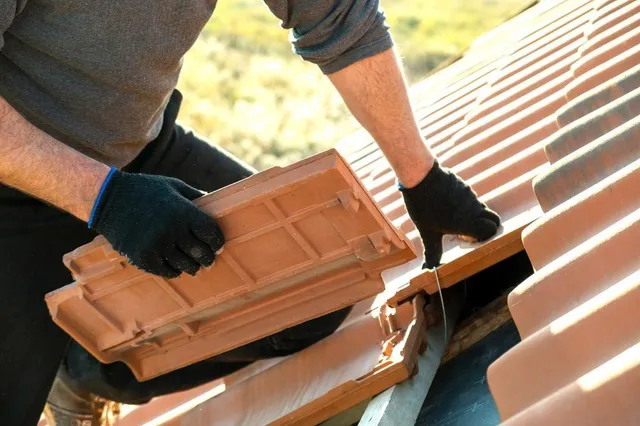
- Repairs: Replace broken tiles, seal hairline cracks on concrete tiles, and repoint ridge caps where mortar is loose. Address any water damage before coating to prevent further damage.
- Primer: Use a masonry sealer or roof membrane primer on concrete roof tiles, and an etch or bonding primer designed for terracotta roof tiles. Always follow coverage rates and recoat windows.
- Sealant Option: If you are not painting immediately, applying a clear, tile-safe sealant after cleaning can protect from staining and moisture until the painting window.
Common Mistakes That Cause Paint Failure
Avoid these errors to protect your investment and your home’s curb appeal.
- Over-Pressure Cleaning that scores the surface or forces water under tiles
- Skipping Cleaners and relying only on water for roof cleaning
- Painting Over Moisture without verifying dryness
- Leaving Soap Residue by not rinsing thoroughly before primer
- Walking Poorly and cracking tiles while cleaning
- Ignoring Gutters which causes water to back up and carry residue across clean roof surfaces
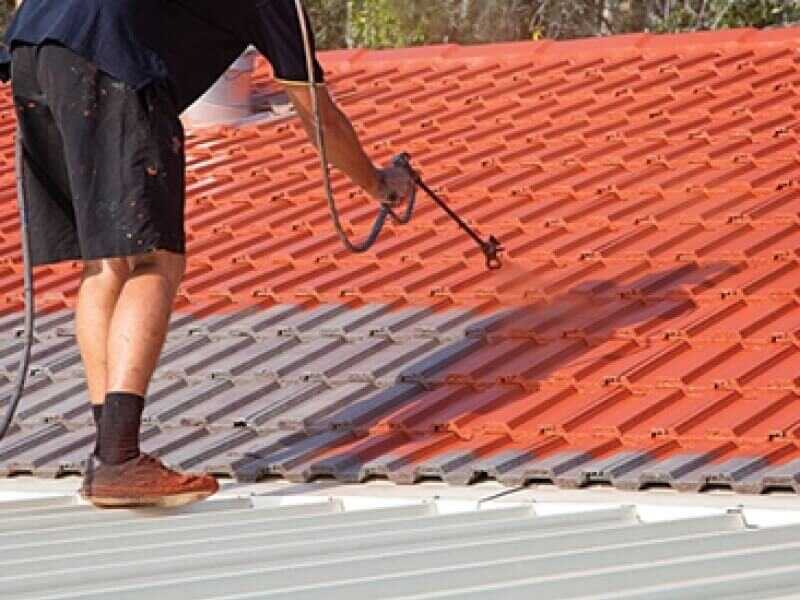
Walking On Roof Tiles Without Causing Damage
Safe footwork prevents costly repairs and keeps you secure at height.
- Step on the overlapping, reinforced lower third of tiles to spread load.
- Keep weight centred and avoid sudden twists that can crack an individual tile.
- Use non slip shoes and a harness clipped to a rated anchor at all times.
- Do not walk on cracked, loose or brittle tiles. Replace or temporarily bridge them before proceeding.
- Wearing non-slip shoes is crucial for preventing slipping while cleaning a tile roof.
Regular Maintenance To Keep A Clean Roof And Protect Your Paint
Incorporating regular cleaning and inspecting your tiled roof reduces expensive repairs later.
- Quarterly Gutter And Valley Checks remove loose debris that holds moisture.
- Six-Monthly Soft-Wash Inspections catch early moss and mould growth.
- Annual Roof Clean is generally recommended to maintain appearance and prevent build-up.
- After Storms check for damaged tiles and dislodged pointing to stop leaks.
- Energy And Appearance benefits add up. A clean roof can improve energy efficiency, prevent deterioration and enhance the home’s curb appeal.
Next Steps Before Painting
After you clean your roof and complete repairs, finish your preparation correctly.
- Confirm Dryness across ridges, shaded faces and under solar frames.
- Mask And Protect flashings, solar arrays and skylights.
- Prime with the correct system for your tile type.
- Plan A Weather Window so primer and topcoats cure without heavy rain.
- Apply Two To Three Coats of roof membrane as per manufacturer instructions for long lasting protection.
Tools And Materials Checklist
Use this list to confirm you are ready to start cleaning roof tiles.
- Pressure washer 1,200 to 2,000 PSI set around 1,500 PSI with 25° to 40° fan nozzle
- Soft-wash sprayer and roof tile cleaner
- Biocide for residual moss algae control
- Long-handled soft-bristled brush, stiff brush and plastic scraper
- Gutter socks, tarps and plastic sheeting for gardens and paths
- Roof anchor, safety rope, safety harness, non slip shoes, safety glasses and gloves
- Ladder with non-slip feet, moisture meter, primer, pointing compound, crack sealant
Frequently Asked Questions
Clean Roof Tiles Before Painting: Quick Summary
- Choose The Right Method By Tile Type: pressure wash concrete, soft wash terracotta.
- Use Numbers To Stay Safe: around 1,500 PSI on concrete with a 25° to 40° fan and a 300 to 450 mm standoff, and at least 30 cm nozzle distance.
- Control Chemistry And Dwell: 15 to 20 minutes dwell, do not let cleaner dry, then rinse thoroughly.
- Protect Your Property: filter socks on downpipes, cover and pre-wet gardens, and keep tanks disconnected.
- Dry Completely and prime appropriately before painting for a durable finish.
- Maintain Regularly: annual cleaning and periodic inspections prevent build-up and expensive repairs.
Need Help From A Perth Specialist
If you would rather avoid the risk and want paint-ready preparation that lasts, consider our professional roof cleaning service offered by Fremantle Roofing Services. Our Perth team cleans concrete and terracotta tile roofs, treats moss and lichen, completes minor repairs and primes correctly so your new roof membrane adheres and performs. Call Fremantle Roofing Services today to book an inspection and get a fixed, written quote for roof cleaning and painting across Perth.

Adam has 28 years of roof tiling and restoration experience, he has been running Fremantle Roofing Services since its inception and is still trying to improve the business and its reputation. Adam has worked on everything, Often a little grumpy before 10 am but otherwise always happy to discuss the job and explain exactly what’s going right or wrong with your roof.





Leave A Comment