
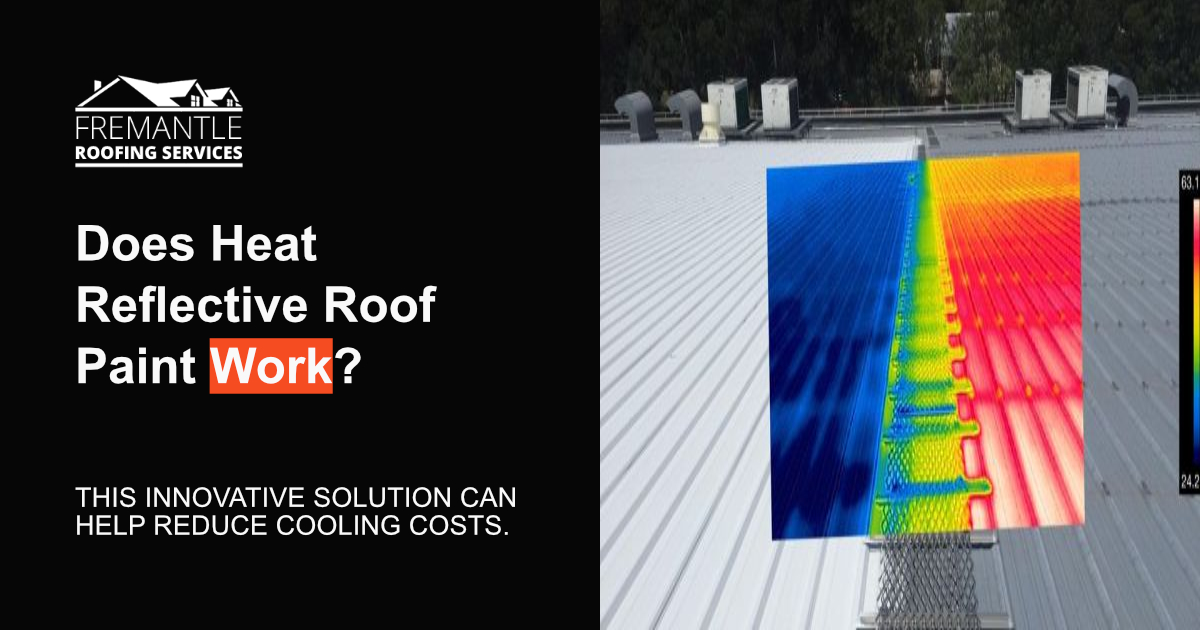
If you’re battling higher temperatures and costly energy bills, you might be asking: does heat reflective roof paint work? Yes, it does. By reflecting sunlight, this paint can lessen the amount your roof heats up, thereby keeping indoor spaces cooler and often reducing energy expenses. This article will unpack the technology, benefits, and limitations of heat reflective roof paint, helping you determine if it’s right for your property.

Understanding Heat Reflective Roof Coatings
The concept of heat reflective roof paint is simple yet revolutionary. It’s a type of roofing coat, typically white or light-coloured, designed to reduce solar heat absorption and provide better insulation. The secret lies in its composition — a mixture of acrylic or polymeric materials and a whitened reflective colorant, which enables the paint to reflect an average of 69% of solar radiation. By acting as a barrier to solar energy transfer, heat reflective roof paints serve as a mirror to reflect UV rays, maintaining a cooler roof surface.
But how does this paint achieve such impressive solar reflectance and what materials are most suited for its application? Let’s delve a bit deeper into the science behind it.
The Science Behind Reflective Paint
The core functionality of reflective roof paint lies in its ability to deflect radiant visual energy and repel solar heat, interrupting the standard transference of solar energy. This reflection of sunlight away from buildings significantly mitigates the urban heat island effect, as the earth radiates heat back into the atmosphere. This contributes to energy conservation in densely populated cities, making reflective roof paint work an essential component of sustainable urban planning.
However, it’s worth noting that while beneficial in warmer months, solar reflective paint does not help maintain indoor warmth during winter, as it does not retain the infrared radiation that can escape from a heated building.
High Solar Reflectance Materials
Technologies like InfraCool and Thermatech enhance solar reflection in heat reflective paints, reducing surface temperature and minimizing interior heat. For instance, solar thermal reflective paints can reflect up to 80% of the sun’s solar energy, significantly cooling surfaces like roofs and hence reducing the reliance on air conditioning systems. Aluminum roof coatings, known for their exceptional heat reflective properties, can enhance the durability of the roofing material, lower energy-related costs, and decrease the strain on cooling systems.
The versatility of heat reflective paint allows it to be applied to various materials, including:
- Concrete tile
- Colorbond steel
- Fibro
- Galvanized iron
- Zinc/aluminum coated steel roofs or walls.

Analysing the Effectiveness of Heat Reflective Roof Paint
So, how effective is heat reflective roof paint? The cooling effect contributed by heat reflective roof paint prevents excessive heat buildup, improving comfort levels within occupied spaces. The paint achieves energy efficiency improvements through high solar reflectance, reducing energy absorption and generating a cooling effect during peak sunlight hours. However, it’s important to note that the energy efficiency savings provided by heat reflective roof paint start to decline one year after its application.
But how does this impact energy consumption and savings, and what role does climate play in its performance? Let’s explore these aspects further.
Energy Consumption vs. Savings
The use of heat reflective coatings can lead to a reduction in interior temperatures by up to 30% and can decrease electricity bills by approximately 25%. For instance, a high-quality heat-reflective roof paint can reduce summer cooling costs by up to 30%, and has even been shown to decrease air conditioning energy consumption in a school by 10% to 20%. However, it’s worth noting that the effectiveness of heat reflective paint in reducing energy consumption can be lesser if a building already has consistent insulation and airtightness.
Climatic Influence on Performance
The performance of cool roofs can vary with building characteristics and can be beneficial in different Australian climates. Incorporating heat reflective roof paint can lead to significant energy savings by reducing the need for air conditioning. However, it’s crucial to remember that heat reflective paint does not retain warmth during winter or cold nights as it primarily reflects solar visible light, not infrared radiation.
Comparing Roof Paint Types
When comparing different types of roof paint, heat reflective paint is particularly beneficial for hot and sunny locations and for roofs that lack adequate insulation. Additives in heat reflective roof paint increase its solar reflectance and emittance, allowing it to effectively reflect back and radiate out absorbed heat, improving energy efficiency over standard paints.
On the other hand, standard roof paints lack these additives that reflect solar energy, resulting in higher surface temperatures and reduced lifespan due to degradation from heat. Solar thermal reflective paints, which reflect or reject sunlight, differ from heat reflective paints as the mere removal of sunlight does not improve the building’s performance.
Reflective Roof Paint vs. Standard Paint
Energy Star Heat Reflective Roof Paint can reflect up to 50% of solar heat, even when applied in dark colors, providing flexibility in color choice without sacrificing energy savings. Standard white roof paints, such as White 16, have high total solar reflectance but still perform similarly to some ceramic solar reflective paints in energy deflection.
However, the presence of consistent spray foam insulation and an airtight ceiling diminishes the distinct energy efficient advantage of solar reflective coatings over traditional white colored paint.
Solar Thermal Reflective Paints
Solar reflective coatings may slightly outperform standard white paint in terms of energy efficiency, but not enough to make a quantifiable difference in roof area temperature reduction. A solar reflective coating, like silicone roof coatings, stands out by:
- Creating a water-resistant barrier
- Reflecting sunlight
- Resulting in lower indoor temperatures
- Potential energy savings
The Lifespan of Heat Reflective Roof Paint
The benefits of heat reflective paint extend beyond energy efficiency to enhancing the lifespan of your roof. By preventing thermal cycles of expansion and contraction, heat reflective roof paint extends roof lifespan and mitigates the occurrence of cracks and damage. Heat reflective coatings protect roofing materials from UV damage, resulting in reduced gloss, elasticity, and adhesion losses, along with diminished color fading.
However, the durability of heat reflective roof paint is significantly influenced by material quality, type of paint used, and exposure to environmental conditions. Typically, roof coatings can last from 5 to 10 years, with some high-quality silicone variants enduring up to 15 years with proper care.
Reapplication and Maintenance Needs
Ensuring the longevity and effectiveness of heat reflective paint requires regular maintenance and periodic reapplication. Applying a primer-sealer before the heat reflective paint can enhance the durability and performance of the paint on the roof. Regular inspections should be conducted to determine if reapplication of heat reflective paint is necessary, considering environmental factors and the overall condition of the roof.
Professional application of heat reflective paint can address significant rust on roofs more effectively than DIY, which may not always provide a lasting solution.
Environmental Impact of Heat Reflective Paint
But the benefits of heat reflective paint go beyond the walls of your home. Heat reflective paint offers the following benefits:
- Reduces interior building temperatures, resulting in lowered cooling costs and a lower carbon footprint
- Minimizes urban heat island effects, contributing to environmental sustainability
- Helps save water
- Reduces ozone levels
A city-scale deployment of cool roofs can lead to:
- A reduction in peak ambient temperatures, aiding in combating urban heat islands
- Using environmentally friendly heat reflective paints without harmful chemicals or VOCs can minimize the carbon footprint of a building
- Heat reflective paint is considered a sustainable option as it contributes to the longevity of buildings.
Sustainable Roofing Solutions
Reflective roofing materials are used in cool roof systems, which are integral to sustainable building practices by minimizing energy consumption and mitigating urban heat. In major Australian cities, cool roofs with solar reflective properties have been shown to lower outdoor air temperatures by up to 2.5°C and reduce energy used for cooling buildings.
Products like Tileguard Heatguard improve a building’s thermal performance, particularly when applied to roofing materials such as Colorbond steel, exemplifying the practical application of sustainable roofing solutions.
Design Considerations for Optimal Efficiency
For optimal efficiency of heat reflective paint, several design considerations come into play. Heat reflective paint work:
- Significantly reduces indoor temperatures by up to 4°C
- Decreases the hours when indoor temperatures exceed 26°C in residential buildings with high insulation levels
- Is designed to reflect solar energy, not infrared energy, so it does not retain warmth inside a building during winter.
Selecting a light-colored heat-reflective roof paint is crucial as it can reflect a greater amount of sunlight, aiding in keeping the building cooler. Opting for metal or Colorbond steel for roofing materials enhances the effectiveness of heat-reflective roof paint, contributing to the design of ‘green’ homes.
Material Selection
Choosing materials that complement the heat reflective properties of the paint, such as those with low solar absorbance, can enhance the overall efficiency of the roofing system. Many people choose to enhance the thermal performance of their Colorbond steel roof by pairing it with Tileguard Heatguard heat reflective paint. This combination is frequently used for this purpose..
Reflective tiles and metal roofs are other options for sustainable roofing, providing both energy efficiency and aesthetic appeal.
Color Choices and Their Effects
Light-colored materials in heat reflective roofs significantly increase solar reflectance, leading to enhanced energy efficiency. White is the most effective color for heat reflective roof coatings due to its high reflectivity, with other light colors also being commonly used.
Dark-colored heat reflective paints can absorb more heat and may not offer the same energy-saving benefits as lighter-colored paints. Choosing the appropriate color for heat reflective roof paint is crucial for maximizing energy savings and the paint’s overall effectiveness.
Installation Tips for Heat Reflective Roof Paint
Getting the most out of your heat reflective roof paint involves more than just slapping it on and hoping for the best. For optimal adhesion and effectiveness of heat reflective paint, preparing the surface by ensuring it is clean and dry is crucial, which may involve pressure washing and guaranteeing the roof is completely dry before application.
An airless spray gun is the preferred tool for applying heat reflective paint as it provides a uniform coat, avoids runs, and reduces the labor intensity of the job. To ensure best results with heat reflective roof paint, agitating the product frequently during application is important to keep the pigmentation even and maintain proper suspension.
Preparing Your Roof for Application
Prior to applying heat reflective paint, follow these steps:
- Thoroughly clean the roof by removing all dust and debris.
- Ensure the surface is completely dry.
- Use a pressure washer for the task to prevent damage to protective coatings, particularly on Colorbond, zinc, or aluminium sheets.
- Check that the roof’s surface temperature is at least 75°F (24°C) to guarantee that heat reflective paint adheres properly and cures correctly.
For metal roofs exhibiting rust, undertake a process of mechanical abrasion followed by the application of primer before the heat reflective coating to secure proper adhesion and longevity.
Professional Application vs. DIY
The application of heat reflective paint necessitates meticulous attention to detail, including maintaining the correct viscosity and ensuring a uniform application thickness. While DIY approaches might be tempting, the detailed nature of correct heat reflective paint application may influence homeowners to consider professional services instead.
For the best outcomes and enhanced safety, professionals with experience in applying heat reflective paint can provide valuable advice and services, including the use of infrared heat lamps.
Innovative Products in the Market
The market is brimming with innovative heat reflective paint products that offer enhanced energy efficiency, heat reflection, and aesthetic options. Consumers should look for heat reflective paint that displays the Energy Star logo, indicating notable certification and quality assurance. Acrylic roof coatings are valued for their excellent reflectivity and UV resistance, helping to prevent cracking and peeling, offering a cost-efficient alternative to silicone coatings.
Elastomeric roof coatings provide high reflectivity and adapt well to the expansion and contraction of roofs, though they are less suited for areas of ponding water or frequent foot traffic. Polyurethane roof coatings are favored for their seamless application, resistance to UV light, and their ability to provide thermal insulation, being both flexible and durable.
Ceramic roof coatings, while potentially more expensive upfront, offer significant long-term savings by reducing energy consumption and cooling costs.
Featured Heat Reflective Coatings
Top-rated heat reflective coatings on the market stand out due to their innovative features that enhance energy efficiency and heat reflection. For instance, NXT COOL ZONE by Nutech is notable for its effective heat reflection, even in dark colors, which addresses the common predisposition that heat reflective coatings are limited to lighter shades.
These innovative products, like NXT COOL ZONE, demonstrate the industry’s progress in creating specialized coatings that not only reduce energy consumption but also expand aesthetic options.
Summary
In a world where energy efficiency and environmental sustainability are paramount, heat reflective roof paint emerges as an innovative solution. From reducing energy consumption and carbon footprints to mitigating urban heat island effects and enhancing the lifespan of buildings, heat reflective paint has proven its worth. While the benefits are clear, the effectiveness of heat reflective paint can vary based on several factors, including the type of paint used, the climate, and the building’s insulation. As we continue to strive for sustainable solutions, heat reflective roof painting offers a promising avenue for energy-efficient and eco-friendly living.
Frequently Asked Questions
Does heat reflective roof paint work in all climates?
Heat reflective roof paint works effectively in hot and sunny climates, but may not retain warmth in colder conditions. It’s effectiveness can vary based on the climate.
How often does heat reflective roof paint need to be reapplied?
Heat reflective roof paint typically needs to be reapplied every 5 to 10 years, but high-quality silicone variants can last up to 15 years with proper care.
Can heat reflective roof paint be applied to any roofing material?
Yes, heat reflective roof paint can be applied to various roofing materials such as concrete tile, Colorbond steel, fibro, galvanized iron, and zinc/aluminum coated steel.
How much energy savings can I expect with heat reflective roof paint?
You can expect heat reflective roof paint to reduce interior temperatures by up to 30% and decrease electricity bills by approximately 25%. This can result in significant energy savings for your home.
Are there any environmental benefits to using heat reflective paint?
Yes, using heat reflective paint can reduce cooling costs, lower carbon footprint, and minimize urban heat island effects, contributing to environmental sustainability.

Adam has 28 years of roof tiling and restoration experience, he has been running Fremantle Roofing Services since its inception and is still trying to improve the business and its reputation. Adam has worked on everything, Often a little grumpy before 10 am but otherwise always happy to discuss the job and explain exactly what’s going right or wrong with your roof.





Leave A Comment